
Hi, we’re Jenny and Natalie.
We’re two artists and designers who have each spent over ten years building our own businesses. Between us we’ve worked in ceramics, furniture, leather goods, perfume, and we’ve learned a few things the hard way.
The biggest one: keeping a busy studio running smoothly is HARD. It’s hard when you’re doing it solo, which is Jenny’s world. It’s hard when you’re doing it with a team, which is Natalie’s. And somewhere along the way, the admin started taking up more of our days than the making did.

Jenny and the whiteboard
Jenny Mulder is a ceramic artist who has spent more than ten years building her own business. She started in 2013 with a small coffee shop in the back of a friend’s bookstore in Austin, then moved toward clay full time, learning at a community studio and then with a woodfire crew in Taos before landing in Los Angeles. Her studio, Sister Ceramics, grew from handmade jars and dishes into lamps, silver charms, big wholesale orders for stores, and custom work for an interior design company.
Every new kind of work added more to keep track of in the studio – from commissions, online sales, wholesale orders, to small specialty projects. Jenny’s system was a whiteboard, long email chains she kept flagging, and, when things got desperate, a mind-numbing spreadsheet. All of the project management software she tried was built for big corporate teams, not for an artist running a studio.
What she really wanted was a studio manager who could tell her what was due, what needed to be made, and where each project stood. She just didn’t have the budget to hire one. So the dream stayed a dream, and the whiteboard got cluttered with more post-it notes.
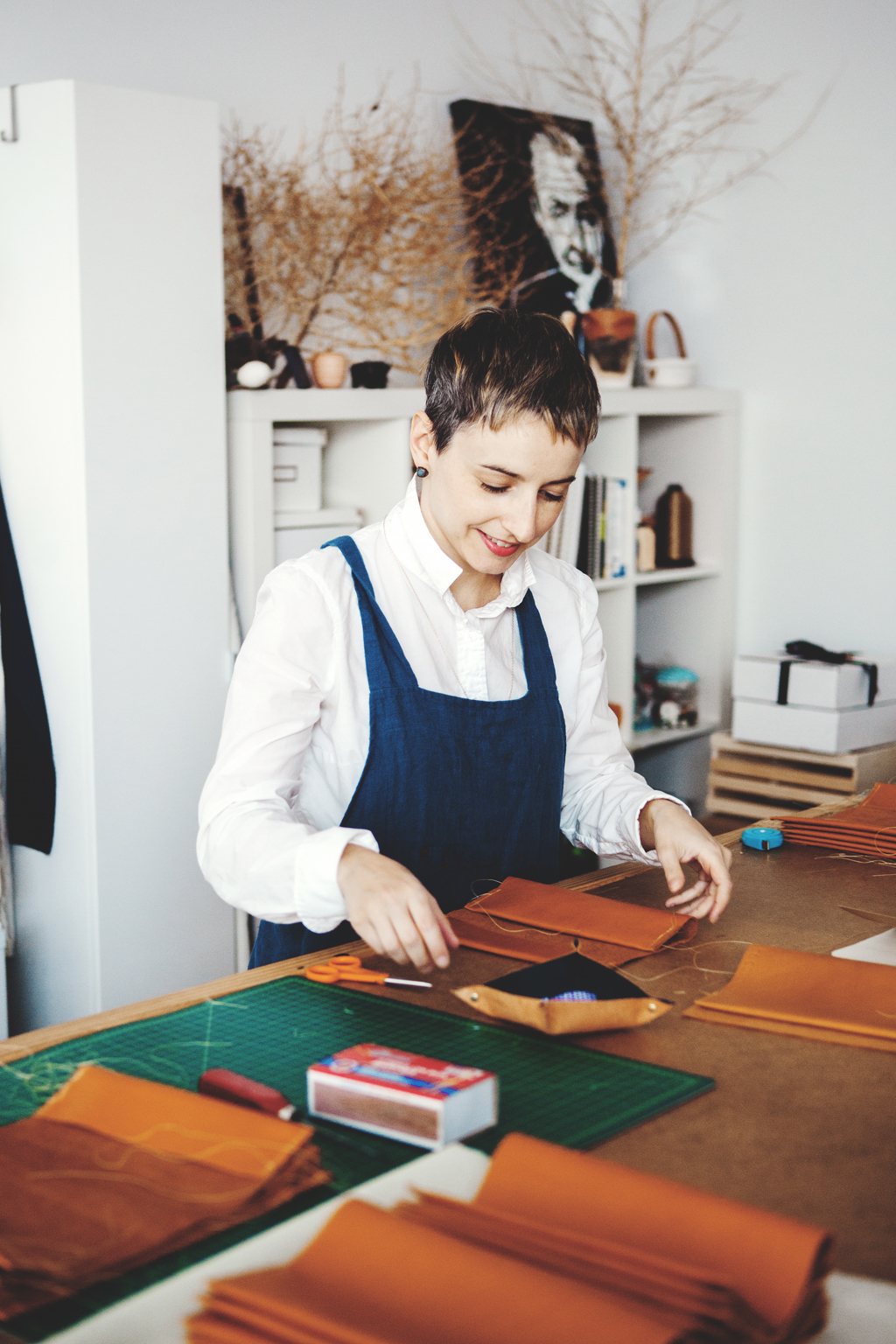
Natalie and the team
Natalie Davis is an artist, leadership coach and serial entrepreneur with more than twenty years in the design industry. Along the way she has been a creative director, design professor, maker, mentor, founder, and facilitator.
In 2009 Natalie founded Canoe in Austin, where she made leather furniture, art, and home goods with a minimalist approach. She grew her team and ran the studio for 14 years, evolving the business from pop up events, craft shows, design fairs, international trade shows, to commissioned work for hospitality clients. Running all of that with a team meant a lot of moving parts at once: inventory, complicated production, and high touch clients who want regular updates.
For the past ten years, Natalie has shifted her focus to supporting creatives as an executive coach (opens in a new tab). Her coaching work began with fellow makers reaching out for advice about growing their businesses, and she saw first hand how they struggled to build systems that were integrated for their scale. Natalie now lives in Santa Fe and works with clients around the world, along with building creative communities by leading retreats, panels, and workshops.
So we built the thing we wished existed
For years we bent big box software into shape to fit studios like ours. It never quite worked, and we kept getting bogged down in admin instead of making. Eventually we stopped bending and built the studio management tool we wished we had.
Eccolo is the dream studio manager. It tells you what’s on the agenda today, which invoice is overdue, and helps you plan production runs. Every detail of a project lives in one place: the photos, the invoices, the POs, and anything else a job needs. You can share a private project page with your client, so everyone is on the same page and nobody is digging through an email chain to find it. When it’s time to get paid, you send a payment link and you’re done. No chasing anyone down.
It means less time searching emails, less guessing at inventory, and less feeling frazzled before an event.
Eccolo means “here it is!”
Eccolo · EH-ko-lo · Italian
It’s what Italians say when they finally find the thing, or hand it over, or when something works out at last. A little “ta-da!”
So when you’re wondering, “Where’s that purchase order my client sent me two weeks ago?” you open the order and: eccolo!
Back to making
Eccolo keeps you on track and frees up brain space so you can get back to making. That’s what we’re here for.
Thanks for being here,
Jenny & Natalie